We mill aluminium, stainless steel, brass, copper, titanium and engineering plastics to a drawing or 3D model. Send a STEP, DXF or PDF file to receive a quotation and feasibility confirmation.

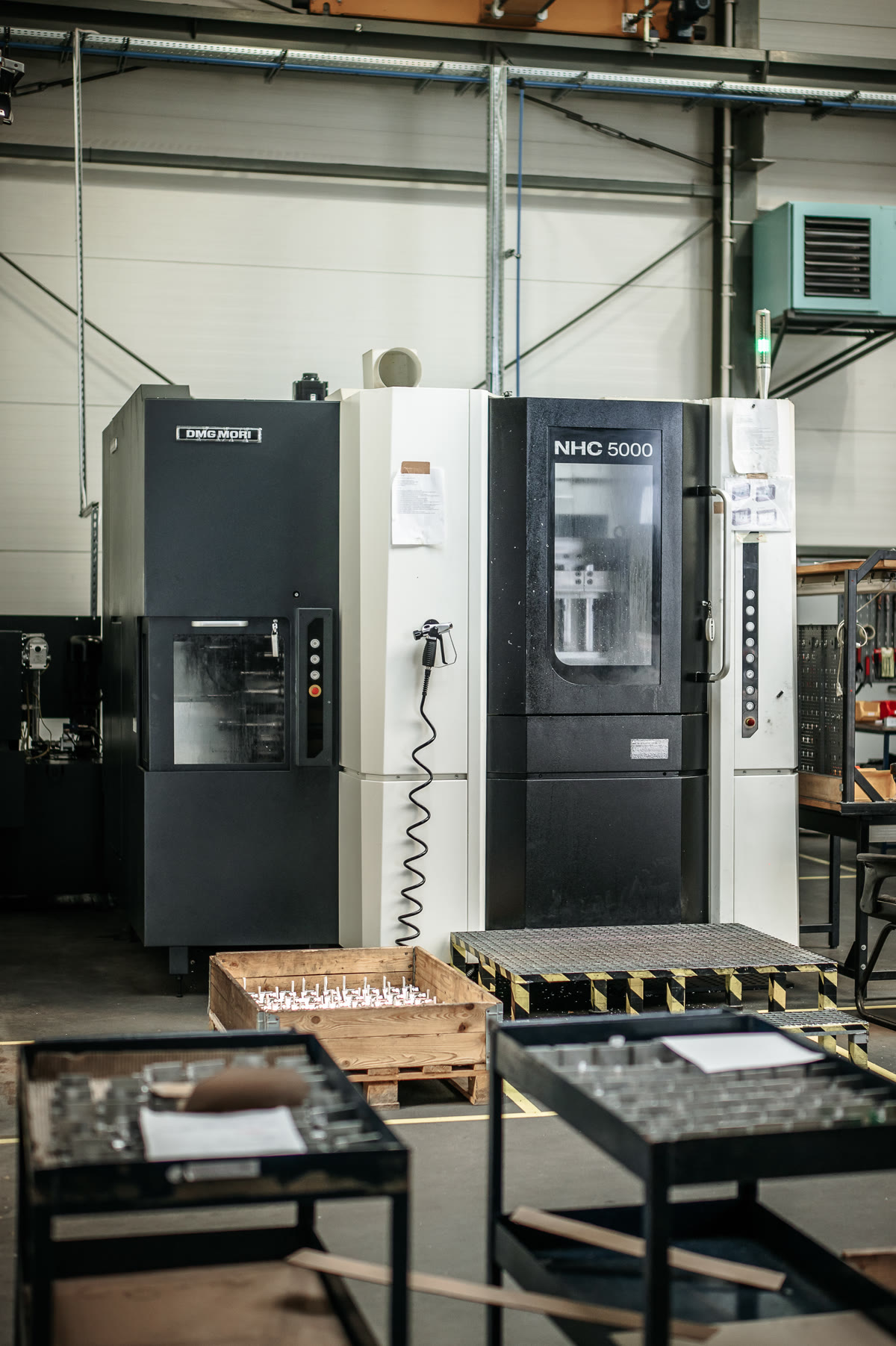
We specialise in precision CNC milling services, producing high-quality metal and plastic components for a wide range of industrial applications. We use DOOSAN and ENSHU machining centres, HECKERT and JAFO conventional milling machines, and KIMLA CNC routers for cutting and milling. We mill to a drawing, sample or finished part supplied by the customer.
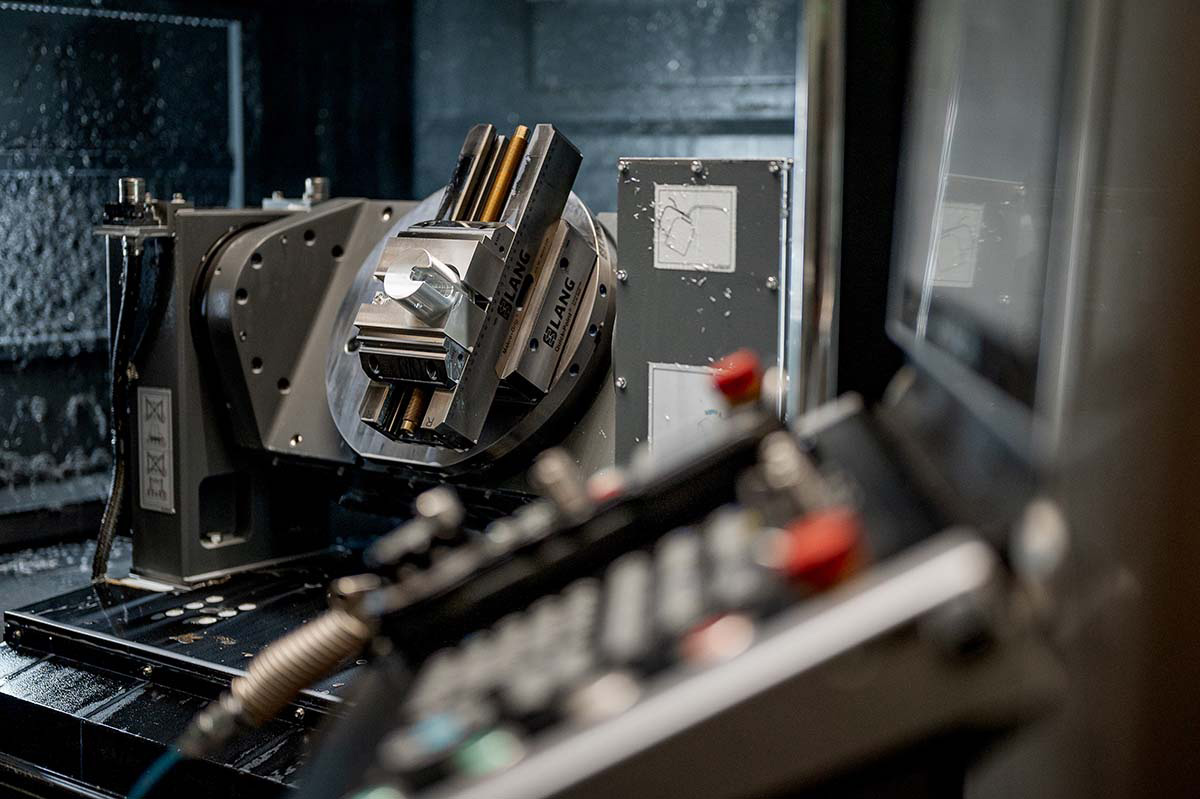
Our modern machinery is equipped with advanced FANUC, SINUMERIK and HEIDENHAIN control systems, allowing us to carry out demanding milling operations to a high degree of precision. Whether you need a prototype before series production, a small batch or regular production runs, we select the milling method to suit the requirements of the order.
We manufacture components to technical documentation and drawings supplied by the customer, ensuring that each part meets the specified requirements. Alongside milling, we also offer CNC turning and CNC cutting, making us a full-service machining partner.
We select the milling technology according to the dimensions, material, geometry and project requirements. We operate in accordance with the ISO 9001:2015 quality management system.
Our material experience allows us to machine a wide range of materials using optimised cutting parameters:
Our production process supports consistent quality and efficiency from concept to finished part. It begins with a detailed review of technical documentation, drawings and specifications to optimise the machining strategy and tool selection.
Programming specialists use professional CAD/CAM software to create optimal toolpaths, minimising cycle time and maximising tool life and surface quality. We check toolpaths before machining begins to prevent collisions and achieve the required dimension on the first part.
Setters prepare the machines, fixtures and tools, and we check the dimensions of the first-off component before starting a production run. Our quality control procedures include in-process monitoring and final inspection using an ABERLINK Axiom coordinate measuring machine, TESA and MITUTOYO measuring equipment, and ABERLINK inspection reports.
During production, operators monitor machining parameters and inspect dimensions throughout the series to maintain repeatability. We record setting adjustments and check their effect on the next part.
We use CNC milling to produce parts for many industrial sectors where accuracy and repeatability are important. Aerospace and defence – we produce components requiring tight tolerances and a high-quality surface finish. On request, we supply a 3.1 material certificate in accordance with EN 10204.
For the automotive industry we produce batches of parts with consistent parameters. Process organisation and quality control help to keep successive batches in line with the specification.
Medical device manufacturing – we apply precision machining and quality assurance processes to meet stringent regulatory requirements. For medical parts, we keep measurement documentation and supply 3.1 material certificates in accordance with EN 10204.
Energy sector, including components for renewable energy systems, requires material experience and precision capabilities that support reliable operation in demanding environments.
Industrial machinery manufacturing benefits from our versatility in materials and component sizes – from small precision parts to large structural elements requiring conventional milling.
For the electronics industry we mill enclosures, heat sinks and structural parts requiring high dimensional accuracy and suitable surface quality.
View the industries we serveANBI-TECH supports industrial procurement teams with CNC machining orders where consistent quality, efficient communication and conformance to specification are important. Our operations are based on stability, scalability and transparent communication – key requirements for international supply chains.
We combine advanced CNC technology with rigorous ISO-compliant processes, providing supply security, batch-to-batch repeatability and controlled production at every stage. Our flexible approach allows us to adapt to changing project requirements while maintaining the service level expected by corporate customers.
We support both long-term production programmes and batches of demanding parts. The scope of cooperation may include documentation review, selection of the production method, manufacturing and ongoing delivery coordination.
We focus on what matters most for global procurement:
consistency, predictability, transparency and the capacity to deliver – every time.
Once you send us a DXF, STEP, IGES, SLDPRT or PDF file, we will recommend the material, grade and machining method. We also accept printed drawings.
Technical consultations help to optimise designs for machinability, potentially reducing costs while improving functionality. We advise on material and tolerance selection.
We accept orders based on files in 5 formats: STEP, IGES, DXF, SLDPRT and PDF. A drawing is not always required: we can reproduce the geometry from a supplied sample or finished part.
CNC milling is a type of machining process. The tool, or milling cutter, performs rotary motion, while the feed motion can be performed by either the cutter or the workpiece. Milling is a surface machining process carried out by the multiple cutting edges that make up the cutting tool.
During operation, only some cutting edges are under load, so their work is not continuous and they are cooled more effectively. However, changes in chip thickness cause variable cutting-edge loads and can shorten tool life.
Milling machines can also be classified by spindle position: in one design the spindle is above the table, while in the other it is below the table. Vertical, horizontal and universal milling machines are also used.
Milling cutters also differ, and their selection matters. They are available in different shapes and sizes and can be made from steel, cemented carbide or fitted with diamond inserts.
Milling techniques can be classified using different criteria:
Machining aluminium requires high-speed spindles and high feed rates. The selection of suitable tools, including O-flute cemented-carbide cutters, is important for effective chip evacuation while maintaining milled-surface quality. Aluminium is a soft, sticky metal: too low a spindle speed causes built-up edge, while too high a speed leads to excessive heating.
The indicative hourly rate for CNC milling is 140-250 PLN/h.
| Service | Indicative rate |
|---|---|
| CNC milling | 140-250 PLN/h |
These are indicative rates, not a price list for a finished part. The price depends on order size, machining complexity, material, tolerances, surface finish, transport options and lead time. Send us a technical drawing, CAD file or sample part and we will prepare an individual quotation.
We provide CNC milling services throughout Poland. In addition to milling, we also carry out CNC turning, CNC cutting and CNC bending – all these processes from one supplier.
We offer preferential discount terms in the following cities: Krakow, Warsaw, Lodz, Katowice, Sosnowiec, Gliwice, Czestochowa, Kielce, Radom, Bielsko-Biala, Bialystok, Bydgoszcz, Gdansk, Gdynia, Kalisz, Konin, Koszalin, Leszno, Lublin, Olsztyn, Opole, Poznan, Rzeszow, Slupsk, Szczecin, Torun and throughout Silesia. This results from our logistics capabilities. We also serve locations outside this list, with delivery scope and logistics agreed individually.
Before sending an enquiry, please contact us, so that we can agree the scope and machining method.
We mill stainless steel, including 316L, carbon steels, aluminium alloys (6082, 5083, PA6, PA11), brass, copper, titanium and engineering plastics – PTFE (Teflon), polyamide, polyethylene (PEUHMW, PEHD, PE1000), as well as Dibond and aluminium composite panels. For each material, we optimise cutting parameters to achieve a high-quality surface finish.
Our capabilities cover 3- to 5-axis milling – detailed dimensions for each type are given in the section above. The largest working envelope is 3100 x 1700 x 350 mm on a CNC router.
Achievable tolerances depend on component size, material and geometry. For critical dimensions, we can achieve a tolerance of ±0.01 mm. We select dimensional inspection to meet drawing requirements and the agreed inspection plan, using, among other equipment, an ABERLINK Axiom coordinate measuring machine. We operate under the ISO 9001:2015 system.
CNC milling is a machining process in which a multi-edge cutting tool, or milling cutter, rotates while the workpiece is held stationary. In CNC turning, the workpiece rotates while the cutting tool feeds against it. Milling is suitable for flat surfaces, pockets and complex 3D geometries. Turning is used for rotational parts such as shafts, sleeves and pins.
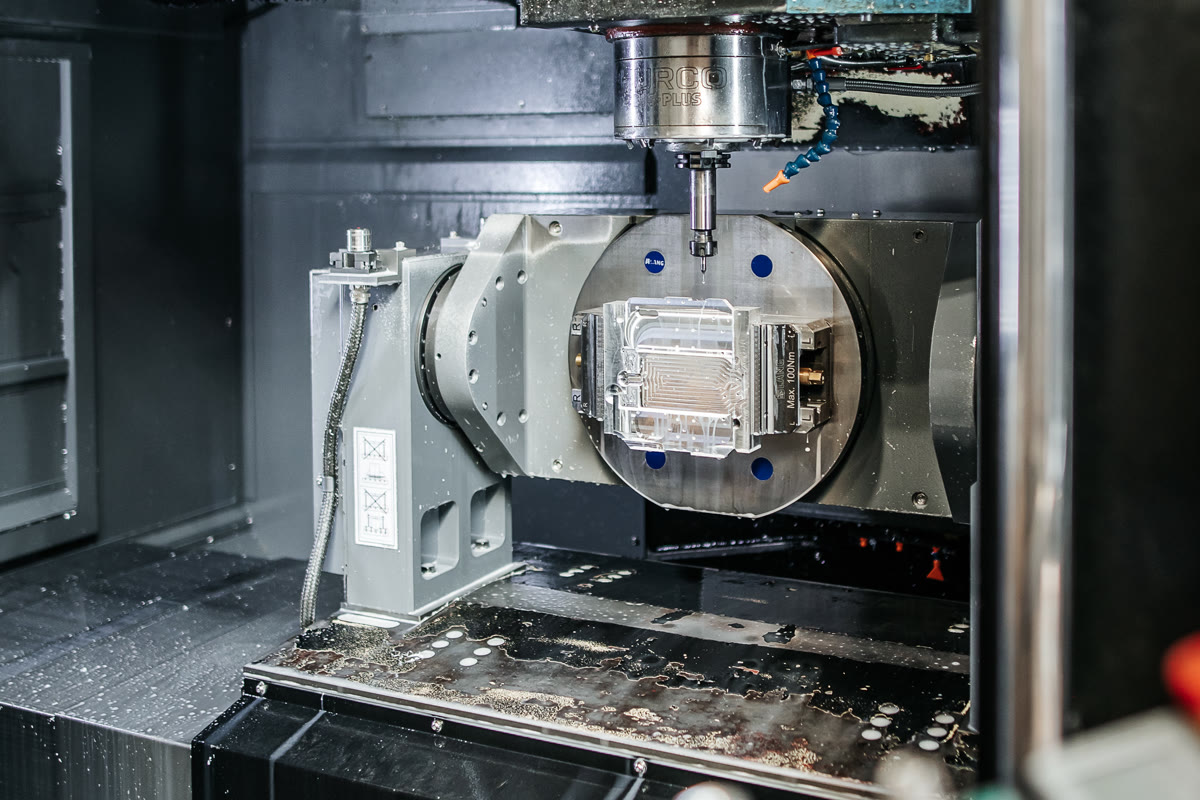
A 3-axis milling machine moves the tool in the X, Y and Z axes and is suitable for flat surfaces and simple pockets. A 5-axis milling machine adds the A and C rotary axes (XYZAC), allowing complex shapes to be machined in one set-up without repositioning the part. This means higher accuracy and shorter production time.
The indicative hourly rate for CNC milling is 140-250 PLN/h. The price of a finished part depends on material, geometric complexity, tolerances, batch size, surface finish and programming time. Send us a drawing or CAD file and we will prepare an individual quotation.
We produce prototypes primarily where the project is intended to lead to series production. A typical project development path includes around 5 prototypes, an initial batch of 20-50 parts, followed by production runs of 100, 500 or 1000 parts. This describes a model of cooperation, not a fixed threshold.
Yes, we mill PTFE (Teflon). We select tools and cutting parameters for the material’s low stiffness and susceptibility to deformation, limiting heating during machining.
We publish references we have received and reviews from the ANBI-TECH business profile on Google Maps. The English versions are faithful translations of the Polish originals.
I can wholeheartedly recommend Anbi-Tech as a reliable and professional partner in machining and in manufacturing parts for the pharmaceutical industry. This is the third company where I have had the pleasure of working with Anbi-Tech, and the cooperation has been of the highest standard every time.
The pharmaceutical industry is exceptionally demanding: precision, on-time delivery, material quality and a full understanding of the customer’s needs all matter. Anbi-Tech has repeatedly proved that it is very well suited to this environment. The company has manufactured change parts, spare parts, filling needles, conveyor screws, components for dispensing powders and liquids, and many other production components for us.
The quality of the parts deserves particular recognition, whether they are made from 316L and 304 stainless steel or plastics such as POM, polyurethane and polycarbonate. The components are manufactured to a very high standard, with close attention to accuracy and detail, which is crucial in our industry.
Anbi-Tech has literally ‘saved our skin’ on many occasions in emergencies where time, a rapid response and a flexible approach to the customer mattered. A major strength of the company is its modern machinery, which enables it to complete even highly demanding projects while maintaining the highest standard of workmanship.
The people are equally important: the company’s staff always show complete commitment and a willingness to cooperate and provide technical support. Their extensive experience, professionalism and collaborative approach to customers are clear to see.
In pharmaceuticals, the ‘paperwork’, meaning certificates, is also important. The certificates have never been questioned during customer or regulatory audits, for example by GIF.
I strongly recommend working with Anbi-Tech to any company looking for a proven, reliable and quality-focused technical partner.
Dariusz Stachowicz, Senior Maintenance Manager, Polfa Warszawa S.A.
We had a very good experience working with Anbi-Tech on a new production line project for a bottling plant. Using a bottle sample and components from the old line, its engineer prepared the design and documentation for new change parts in SolidWorks. Anbi-Tech then manufactured timing screws, star wheels, drive components, bottle orienters, bottle turners and feeding components, among other items.
A major advantage is the end-to-end approach, from analysis and design through to the manufacture of finished components. Their considerable technical experience, precision and ability to solve unusual problems are clear. I recommend them.
Bartłomiej Ć, Specialist, ORLEN
We work with Anbi-Tech to manufacture parts and technical components for our projects. We value them above all for their workmanship, on-time delivery and excellent communication. When requirements are unusual, they can advise us and find a solution instead of simply manufacturing a part from a drawing. A reliable partner that I am happy to recommend.
Marek P., Production Manager, Triccor
A reliable company with extensive experience! They manufacture parts from steel, aluminium and specialist plastics such as POM and PTFE. Every service, whether turning, milling or CNC cutting, is carried out perfectly and with attention to the smallest detail. Excellent communication, professional advice and consistently on-time delivery. I wholeheartedly recommend them to anyone who needs reliable components.
Damian Lab
For a quotation, send a PDF or DXF drawing or a STEP model with dimensions. State the material, the number of pieces and the quality requirements. A photograph of the part alone, without dimensions, does not allow a reliable quotation to be prepared.
If the project combines several operations, we will agree the scope of machining, inspection, assembly and processes carried out by partners.

Tel.: +48 32 788 70 10
Mobile: +48 693 726 777
Mobile: +48 693 726 127

Olewin 50A, 32-300 Olkusz
VAT ID: PL6372190715

anbi@anbi-tech.pl