We cut gaskets and technical components from plastics, rubber, PTFE and thermal insulation materials with an oscillating knife, while aluminium is machined with a milling head. Send us a DXF drawing to receive a quotation.

We cut gaskets and technical components from plastics, rubber and sealing materials on CNC plotters with an oscillating knife. The cutting path is prepared in a CAD/CAM system, and the knife introduces no heat into the material.
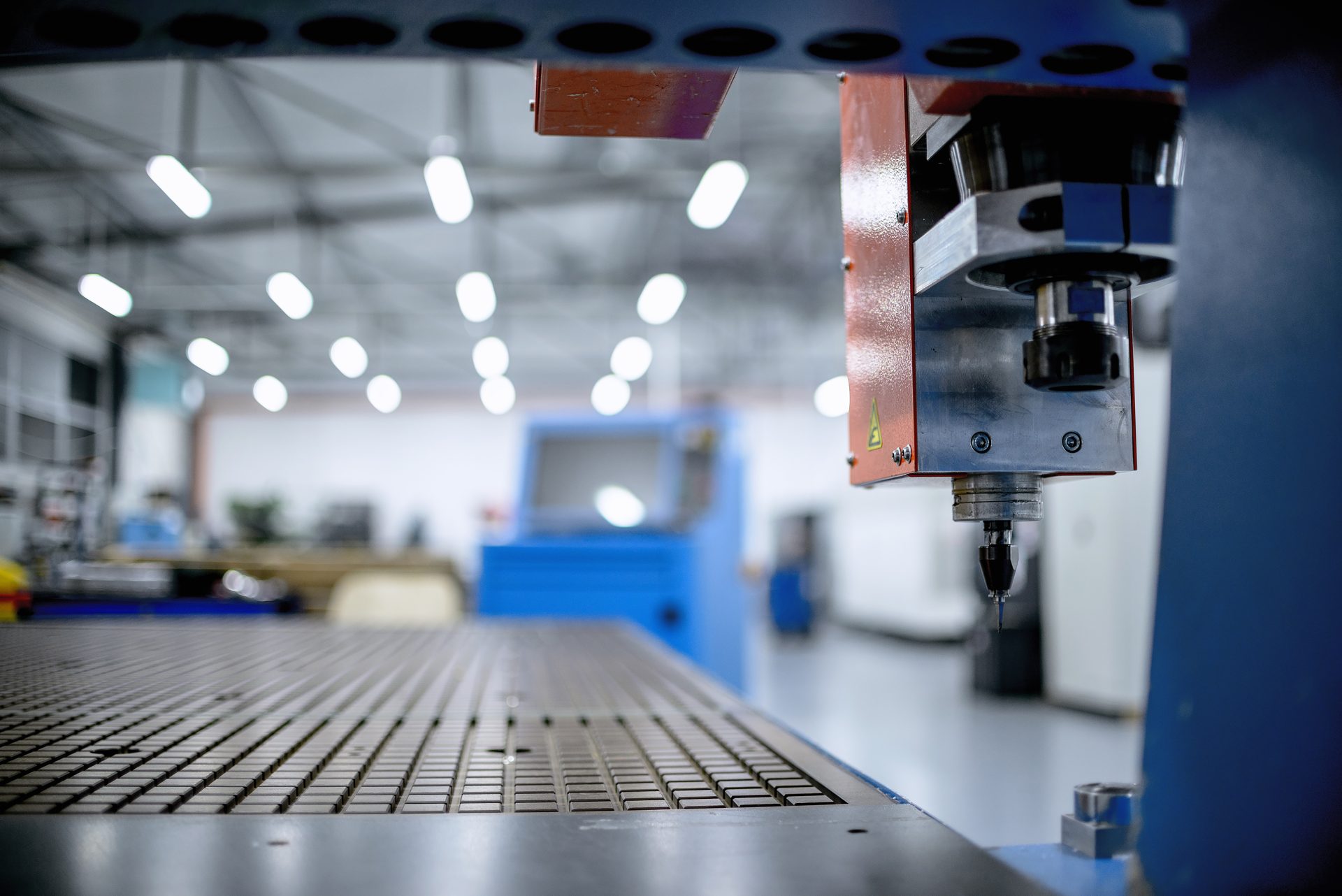
We use KIMLA cutting and milling plotters with working areas of 3100 x 1700 x 350 mm in the four-axis version, 3100 x 1700 x 300 mm and 2100 x 1500 x 200 mm. The oscillating knife limits heat input when cutting rubber, silicone and heat-sensitive plastics. Aluminium is machined with a milling head.
We stock sealing materials from DONIT TESNIT, GAMBIT and KLINGER. We complete orders using our own or free-issue materials, based on customer documentation or documentation prepared by our Technical Department. ISO 9001:2015 certification confirms the quality of our processes.
Our KIMLA cutting and milling plotters provide precision CNC cutting of technical components and gaskets:
We cut components from a broad range of technical materials:
We help select the material for the component design, temperature, medium and other operating conditions.
Our CNC gasket cutting services support sealing applications in the food industry, using materials approved for food contact and precision CNC plotter cutting for hygienic solutions. We maintain compliance with regulatory requirements while achieving effective sealing in demanding processing environments.
Petrochemical applications require chemically resistant materials and precision cutting capabilities for pump seals, valve gaskets and heat exchanger components. We produce sealing solutions for aggressive chemical environments with changing temperatures and contact with corrosive media.
For the energy sector, including renewable energy installations, we cut sealing components from materials selected for the operating conditions. We consider temperature, process medium and required component life, among other factors.
Shipbuilding and marine applications use our large-format cutting capabilities on a KIMLA 3100×1700 mm plotter and marine-grade materials for structural sealing components. Our solutions provide weather resistance and dimensional stability in marine environments involving seawater and thermal cycling.
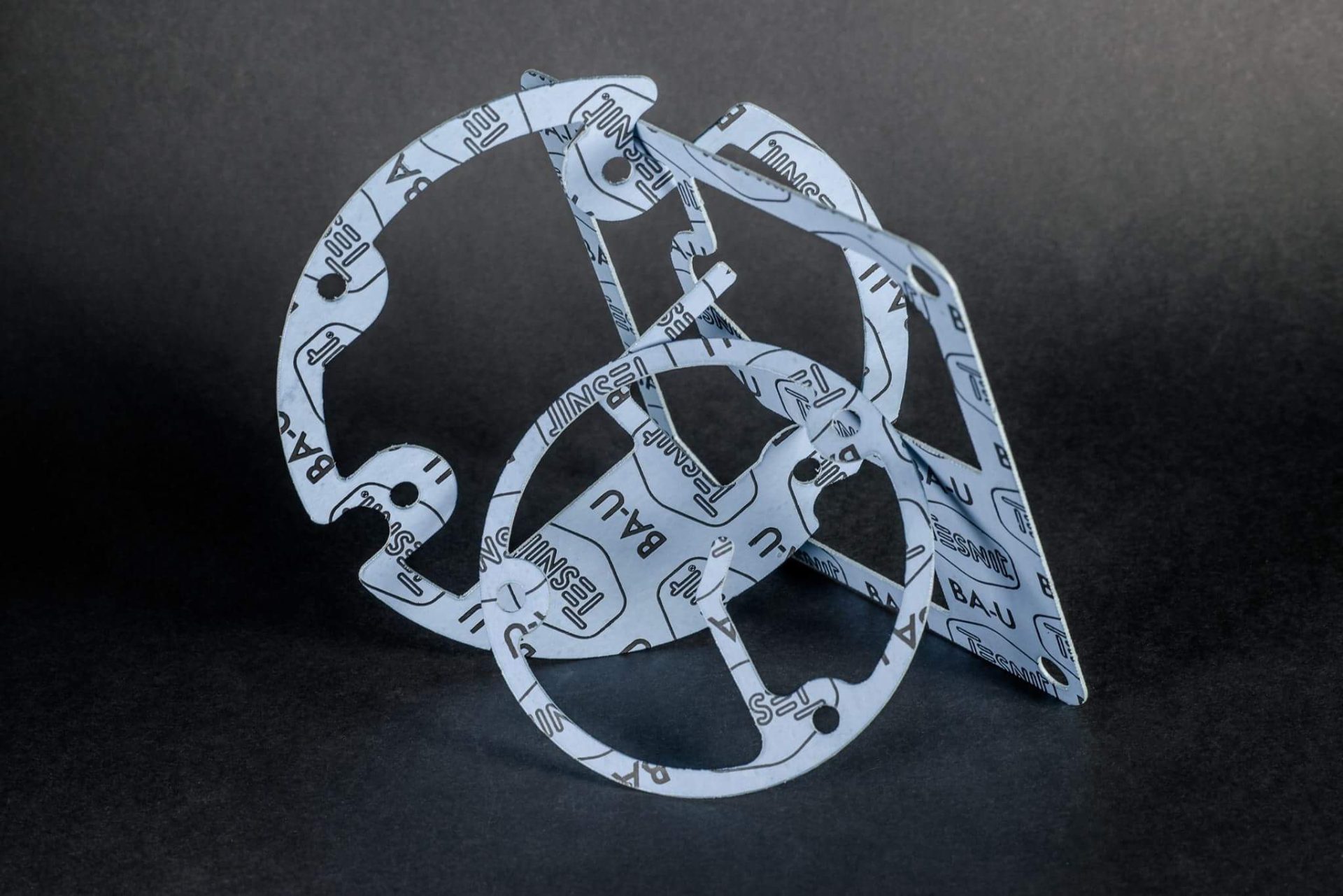
We cut gaskets for pump applications across all industrial sectors. Precision CNC-cut gaskets provide sealing performance for different flange configurations and pressure ranges when the correct material is selected.
Valve seals include seats, gland packings and body gaskets made from materials selected for the process medium and temperature range. Precision CNC cutting provides the correct fit and effective sealing.
Heat exchanger gaskets require materials that withstand cyclical temperature changes and maintain sealing performance under thermal conditions. Our material knowledge and cutting precision support the selection of a suitable solution.
Flange gaskets for piping systems require dimensional accuracy and consistent material properties across large production runs. Efficient cutting processes and quality control maintain consistency between batches.
For custom sealing solutions, we use our material knowledge and cutting flexibility to complete unusual orders requiring non-standard shapes, materials or parameters.
When selecting a solution, we consider material properties, the process medium, temperature, pressure and seal geometry.
Explore technical sealsSelecting the blade geometry for the material extends tool life and improves cut edge quality. We use different oscillating knives for rubber, PTFE and thermal insulation materials.
We prepare cutting layouts in SigmaNest, which nests components on the sheet to reduce material waste.
View our machinery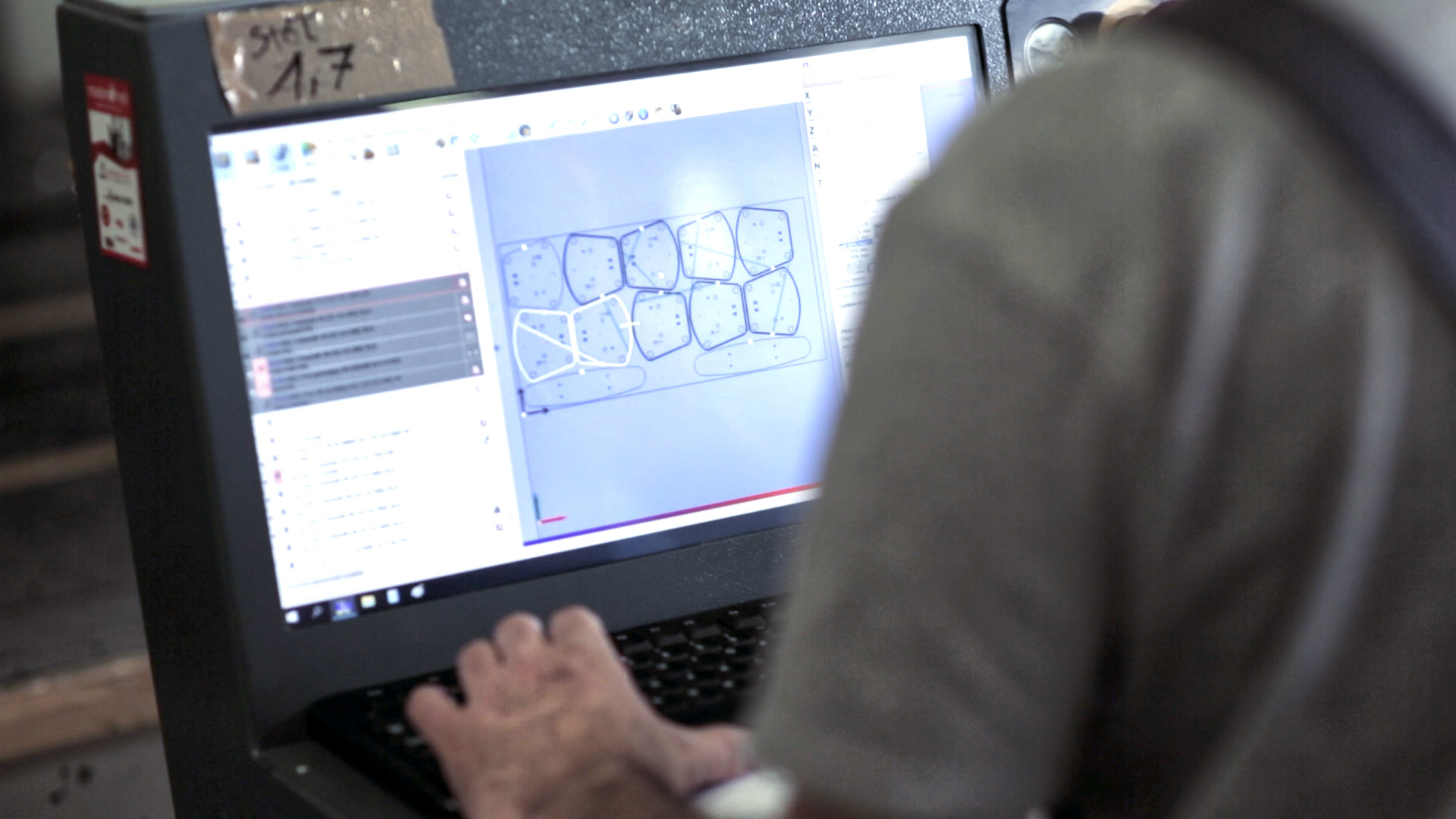
Developments in knife technology include specialist geometries optimised for particular materials, extending blade life while improving cutting quality. We select the blade geometry for the material.
We monitor blade condition and edge quality during cutting and replace a worn knife before it affects the component. Cutting parameters for a new material are established through trials.
Integration with the quality system ensures that technological improvements comply with our ISO 9001:2015 requirements while supporting specific customer quality needs and the requirements agreed for each order.
We specialise in precision CNC profile cutting, producing gaskets, technical components and parts from PTFE, rubber, plastics and thermal insulation materials. Our KIMLA cutting and milling plotters with oscillating knives provide smooth edges and dimensional accuracy.
We stock sealing materials from DONIT TESNIT, GAMBIT and KLINGER. Long-standing supplier relationships support material availability and competitive pricing. We understand the requirements of sealing applications and maintain appropriate stocks.
Our Technical Department can help optimise a gasket design for a specific application by selecting the material, refining the shape and proposing a solution that reduces cost while retaining sealing performance.
We primarily make prototypes for projects that lead to series production. Orders are managed under our ISO 9001:2015 quality management system, and the scope of quality documentation and inspection reports is agreed for each order.
Send us a technical drawing, CAD file or physical sample and we will prepare a quotation.
CNC (Computer Numerical Control) is a machining method based on computer-controlled machines. In CNC cutting, a plotter with an oscillating knife cuts the material along a programmed path, maintaining precision and smooth edges. CNC cutting differs from conventional sawing methods because it provides better results and repeatability. The cut must first be designed in CAD/CAM software, after which the machine processes the material precisely to the project requirements. Once the program has been prepared, the machine follows the planned path automatically under operator supervision and in accordance with the process procedure.
The standard process for producing a part on a CNC plotter consists of 3 stages:
The price of CNC cutting depends on several factors: the material type, sheet thickness, shape complexity, production quantity and tolerance requirements. For machining on computer numerically controlled equipment – CNC – CAD/CAM programming time and the utilisation of the material sheet are also important.
The cost of CNC cutting is affected by the material price (PTFE, NBR/EPDM rubber, silicone and Viton have different prices), plotter time, shape complexity (simple flange gaskets versus complex geometries), quantity (production runs reduce the unit cost because programming is completed once) and quality requirements (documentation and inspection reports).
Send us a technical drawing or CAD file and we will prepare a quotation. We primarily make prototypes for projects that lead to series production. Every order is completed on the basis of documentation supplied by the customer or prepared by our Technical Department.
We produce parts from plastics and aluminium for various industrial sectors. We use oscillating knives for soft materials and a milling head for aluminium.
We prepare the machining path in a CAD/CAM system from the component documentation.
We use KIMLA cutting and milling plotters for 2D and 3D cutting and milling within their working areas. CNC turning is carried out on lathes, while CNC milling of components is carried out on milling machines or plotters, depending on the material and geometry.
We complete every order from documentation supplied by the customer or prepared by our Technical Department, including orders using free-issue material. We select sealing materials from the ranges offered by DONIT TESNIT, GAMBIT and KLINGER.
We have a well-equipped stockholding facility for sealing and thermal insulation materials, enabling efficient material selection and fast order fulfilment. Contact us to discuss your project requirements.
Die cutting requires a cutting die, which is a steel tool matched to the shape of the part. It is cost-effective for very large runs of identical parts. CNC profile cutting on a plotter does not require a die. The shape is programmed in CAD/CAM and can be changed at any time without the cost of a new tool. CNC is therefore better suited to prototypes, small batches and changing geometries.
An oscillating knife is a blade fitted to the head of a CNC plotter that moves rapidly up and down while cutting. Unlike a laser, it does not heat the material, so the cut edge remains smooth, with no melting or change in properties. We use oscillating knives on KIMLA plotters to cut rubber, PTFE, plastics, silicone and thermal insulation materials.
Yes. We use CNC plotters with an oscillating knife to cut CR, SBR, NBR and EPDM rubber, including reinforced grades. Selecting the appropriate blade and cutting speed prevents the material from stretching. Rubber requires a different approach from rigid plastics, so we use dedicated knives and parameters matched to the hardness and thickness of the particular rubber compound.
Yes. We cut PTFE on a CNC plotter with an oscillating knife. PTFE is soft and susceptible to deformation, so it requires suitable support and sharp knives to achieve a clean, dimensionally accurate edge. Oscillating knife cutting does not alter the chemical properties of PTFE, which is important in pharmaceutical and chemical applications.
Yes. We cut silicone on a CNC plotter with an oscillating knife. Silicone is flexible and can deform during cutting, so we use suitable speed and pressure settings. Oscillating knife cutting does not heat the silicone, preserving its temperature properties and flexibility. We also cut Viton FPM and FKM.
The achievable tolerance depends on the material grade and thickness, geometry, clamping method and project requirements. PTFE is soft and susceptible to deformation, so it should not be treated like a rigid material. We confirm the specific tolerance during quotation from the technical drawing.
CNC cutting on a plotter with an oscillating knife has limitations. Maximum material thickness depends on its properties, it is not suitable for cutting hard metals, for which CNC milling or laser/plasma cutting is used, and die cutting may be faster for very large runs of identical parts. For changing geometries, small batches and heat-sensitive materials, however, a CNC plotter is an effective choice.
The choice of technology depends on the material, thickness and required edge quality. An oscillating knife cuts without heat input and works well for rubber, silicone, PTFE, plastics and thermal insulation materials. Laser and waterjet cutting cover different applications, so the method is selected for the specific component, cost and required accuracy.
We publish references we have received and reviews from the ANBI-TECH business profile on Google Maps. The English versions are faithful translations of the Polish originals.
I can wholeheartedly recommend Anbi-Tech as a reliable and professional partner in machining and in manufacturing parts for the pharmaceutical industry. This is the third company where I have had the pleasure of working with Anbi-Tech, and the cooperation has been of the highest standard every time.
The pharmaceutical industry is exceptionally demanding: precision, on-time delivery, material quality and a full understanding of the customer’s needs all matter. Anbi-Tech has repeatedly proved that it is very well suited to this environment. The company has manufactured change parts, spare parts, filling needles, conveyor screws, components for dispensing powders and liquids, and many other production components for us.
The quality of the parts deserves particular recognition, whether they are made from 316L and 304 stainless steel or plastics such as POM, polyurethane and polycarbonate. The components are manufactured to a very high standard, with close attention to accuracy and detail, which is crucial in our industry.
Anbi-Tech has literally ‘saved our skin’ on many occasions in emergencies where time, a rapid response and a flexible approach to the customer mattered. A major strength of the company is its modern machinery, which enables it to complete even highly demanding projects while maintaining the highest standard of workmanship.
The people are equally important: the company’s staff always show complete commitment and a willingness to cooperate and provide technical support. Their extensive experience, professionalism and collaborative approach to customers are clear to see.
In pharmaceuticals, the ‘paperwork’, meaning certificates, is also important. The certificates have never been questioned during customer or regulatory audits, for example by GIF.
I strongly recommend working with Anbi-Tech to any company looking for a proven, reliable and quality-focused technical partner.
Dariusz Stachowicz, Senior Maintenance Manager, Polfa Warszawa S.A.
We had a very good experience working with Anbi-Tech on a new production line project for a bottling plant. Using a bottle sample and components from the old line, its engineer prepared the design and documentation for new change parts in SolidWorks. Anbi-Tech then manufactured timing screws, star wheels, drive components, bottle orienters, bottle turners and feeding components, among other items.
A major advantage is the end-to-end approach, from analysis and design through to the manufacture of finished components. Their considerable technical experience, precision and ability to solve unusual problems are clear. I recommend them.
Bartłomiej Ć, Specialist, ORLEN
We work with Anbi-Tech to manufacture parts and technical components for our projects. We value them above all for their workmanship, on-time delivery and excellent communication. When requirements are unusual, they can advise us and find a solution instead of simply manufacturing a part from a drawing. A reliable partner that I am happy to recommend.
Marek P., Production Manager, Triccor
A reliable company with extensive experience! They manufacture parts from steel, aluminium and specialist plastics such as POM and PTFE. Every service, whether turning, milling or CNC cutting, is carried out perfectly and with attention to the smallest detail. Excellent communication, professional advice and consistently on-time delivery. I wholeheartedly recommend them to anyone who needs reliable components.
Damian Lab
For a quotation, send a PDF or DXF drawing or a STEP model with dimensions. State the material, the number of pieces and the quality requirements. A photograph of the part alone, without dimensions, does not allow a reliable quotation to be prepared.
If the project combines several operations, we will agree the scope of machining, inspection, assembly and processes carried out by partners.

Tel.: +48 32 788 70 10
Mobile: +48 693 726 777
Mobile: +48 693 726 127

Olewin 50A, 32-300 Olkusz
VAT ID: PL6372190715

anbi@anbi-tech.pl